When it comes to enhancing your outdoor living space, the choice between a deck or patio can be a difficult one. As the saying goes, ‘there’s no one-size-fits-all.’
Both structures offer their own advantages and disadvantages, and the final decision ultimately depends on individual needs and preferences. Understanding the pros and cons of each option is critical in making an informed decision.
This guide provides a comprehensive analysis of the factors to consider when choosing between a deck or patio. From the types of structures available to the maintenance and durability of each, this article offers a detailed examination of the features and benefits of both options.
Whether you’re looking for a cost-effective solution or a structure that offers maximum privacy, this guide will help you weigh the options and make an informed decision that best suits your needs.
Key Takeaways
- Patios outlast decks in terms of durability
- Decks offer a better view due to their elevation
- Patios offer more privacy due to their low-profile design
- Decks require more maintenance than patios
Types of Structures
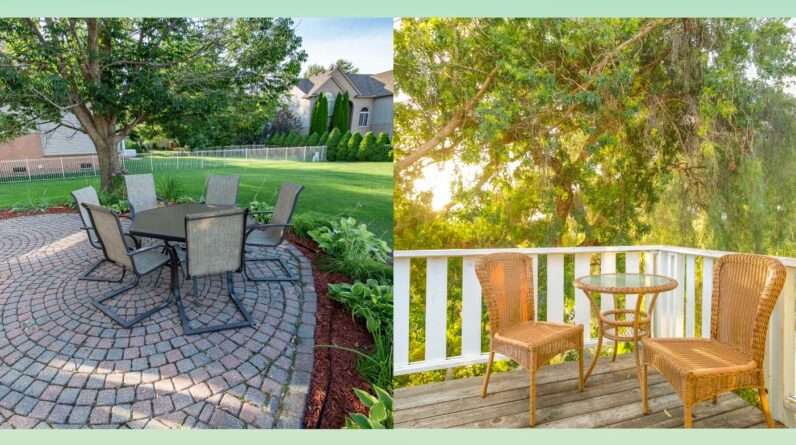
When comparing decks and patios, it is important to note that decks are typically made of wood, while patios are made of concrete, paver stone, or bricks. Decks are elevated structures that are built above the ground, while patios are ground-level structures.
Patios tend to be more durable than decks, with patios typically outlasting decks in terms of sheer years of service. This is because patios are made of materials that are resistant to weathering, such as concrete and stone, whereas decks are made of wood, which is more susceptible to rot and decay over time.
In addition to their durability, patios also offer more privacy than decks due to their low-profile design and ability to be surrounded by trees and shrubs. However, patios require extremely even and flat ground to be built on, while the flatness of the ground isn’t a major concern for decks.
Decks also offer a nice view due to their elevation, while patios can get extremely hot during the summer due to their materials. Ultimately, the choice between a deck and a patio depends on individual needs and preferences, as both structures have their pros and cons.
Factors to Consider
One important aspect to consider when deciding between the two structures is their suitability for uneven terrain. Patios require extremely even and flat ground to be built on, which can limit their potential locations. On the other hand, flatness of the ground isn’t a major concern for decks, as they can be built on a slope or uneven terrain with proper engineering and architectural support. This can make decks a more flexible option for homeowners who have hilly or uneven yards.
Another factor to consider is the cost of building. Building a deck typically costs more than a patio due to the cost of materials and labor. However, decks have a higher return on investment value, with an expected ROI of about 70% to 80%. Patios, on the other hand, are a more cost-effective option in terms of construction and maintenance, as they don’t require regular maintenance except for cleaning.
Ultimately, the decision between a deck and patio depends on individual preferences and needs, including budget, location, and desired features.
Maintenance and Durability
The maintenance and durability of outdoor structures are essential aspects to consider when deciding between different options for backyard design.
Patios are known for their durability, as they can last for many years with minimal maintenance. Patios made of concrete, paver stone, or bricks do not require regular maintenance except for occasional cleaning. However, they are not immune to damage and may require repairs or replacement if cracks or other issues arise.
Decks, on the other hand, require more maintenance than patios. Since they are made of wood, they need proper sealing and restaining every few years to prevent rotting and damage from the elements. Failure to maintain a deck can lead to costly repairs or even replacement. Despite the required maintenance, decks can still last for many years if cared for properly.
Ultimately, the choice between a deck and a patio comes down to personal preferences and how much maintenance one is willing to do to ensure the longevity of their outdoor structure.
Frequently Asked Questions
What is the average lifespan of a deck or patio?
The average lifespan of a patio is longer than that of a deck. Patios made of concrete, paver stone, or bricks can last for several decades, while decks made of wood may last for around 10-15 years with proper maintenance.
Can a patio be built on uneven terrain with the use of retaining walls?
Retaining walls can be used to build a patio on uneven terrain, but the process requires careful planning and expert installation. The height and weight of the walls must be considered, along with drainage and soil stability.
How much does the cost of a deck or patio vary depending on the size of the structure?
The cost of a deck or patio varies depending on the size of the structure. Decks typically cost more due to the cost of materials and labor, while patios are generally less expensive.
Is it possible to add a roof or cover to a deck or patio for protection from the elements?
It is possible to add a roof or cover to both decks and patios for protection from the elements. This can increase the cost of the project, but provides additional benefits such as extended use of the space and protection of furniture.
Are there any eco-friendly options for building a deck or patio?
Eco-friendly options for building a deck or patio include using sustainable materials like bamboo, reclaimed wood, or composite decking made from recycled materials. Additionally, choosing a permeable surface for a patio can help with water conservation.
Conclusion
In conclusion, the decision between a deck or patio ultimately comes down to individual needs and preferences. Both structures offer their own unique set of advantages and disadvantages, and it’s important to carefully consider each factor before making a final choice.
The type of structure you choose will depend on your budget, desired level of customization, safety concerns, and maintenance requirements.
Whether you’re looking to create a stunning outdoor living space or simply seeking a functional area for relaxation and entertainment, it’s important to weigh the pros and cons of each option.
By taking the time to carefully consider your needs and priorities, you can make an informed decision that will provide years of enjoyment and satisfaction.
As the saying goes, ‘choose wisely, for your decision will be with you for a long time.’
Further Reading