Are you tired of a boring and lackluster outdoor space? Do you want to add some natural beauty and function to your landscaping? Look no further than rocks! With their versatility and durability, rocks can add a unique and timeless aesthetic to your yard while also serving practical purposes.
In this article, we will explore seven ways to use rocks in your landscaping for maximum beauty and function.
From creating drainage channels and rock edging to incorporating them into garden design and replacing your lawn, these ideas will transform your outdoor space into a natural wonderland.
Not only will you increase the value and curb appeal of your home, but you will also benefit from the natural barriers against erosion, floods, and hurricanes that rocks provide.
So, let’s get started and bring some rock-solid beauty to your landscaping!
Drainage Channels
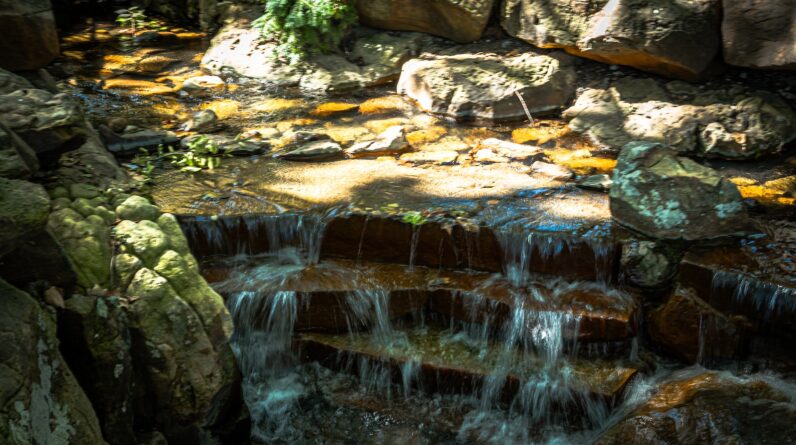
If you’re tired of dealing with standing water in your yard, creating drainage channels using large boulders can not only improve water drainage and prevent flooding, but also add a natural and visually appealing element to your outdoor space.
To get started, remove the topsoil and make a trench at least 6 inches deep. Then, place the large boulders securely in the trench, leaving enough space between them for water to flow through. The size of rock used will determine the width of the channel.
Rock edging provides a clean and refined look to your outdoor space. Rocks can be made of sandstone, limestone, granite, or other types of rock. To secure the rocks into the soil, use a hammer to firmly place them.
They can be used to edge walkways and driveways or to create borders around flower beds or other features. With just a few simple steps, you can add a sophisticated touch to your landscaping.
Incorporating rocks into your landscaping not only adds visual interest, but also provides functional benefits. By creating drainage channels and using rock edging, you can prevent water from pooling in your yard and give your space a polished look.
In the next section, we’ll discuss how you can use rocks as the primary decorative element in your garden design.
Rock Edging
For a clean and refined look in your landscape design, incorporate rock edging using sandstone, limestone, granite, or other types of rock – just hammer them firmly into the soil.
This technique is a popular choice, with over 70% of landscapers using rock edging in their designs. Here are five reasons why you should consider rock edging for your own landscaping:
- Adds a natural, rustic aesthetic to your yard
- Provides a barrier against weeds and grasses
- Helps contain mulch and other landscaping materials
- Is durable and long-lasting, with minimal maintenance required
- Can be easily customized to fit any shape or size of landscape design
When choosing rocks for your edging, consider the color and texture of the rocks and how they will complement the rest of your landscaping. You can also mix and match different types of rocks for a more eclectic look.
Once you have selected the rocks, use a hammer to secure them firmly into the soil. Make sure they are level and flush with the ground for a polished finish.
Next up, let’s explore the world of rock gardens and how you can use rocks as the primary decorative element in your landscaping.
Rock Gardens
Let’s dive into creating a stunning rock garden that’ll add natural beauty and tranquility to your yard.
As the primary decorative element, rocks can be used to create a variety of styles, including alpine, desert, cascade, Japanese, and Chinese. When choosing rocks, it’s best to go for those with a smooth and rounded shape to avoid any sharp edges or corners. The number of rocks used depends on the size and design of the garden.
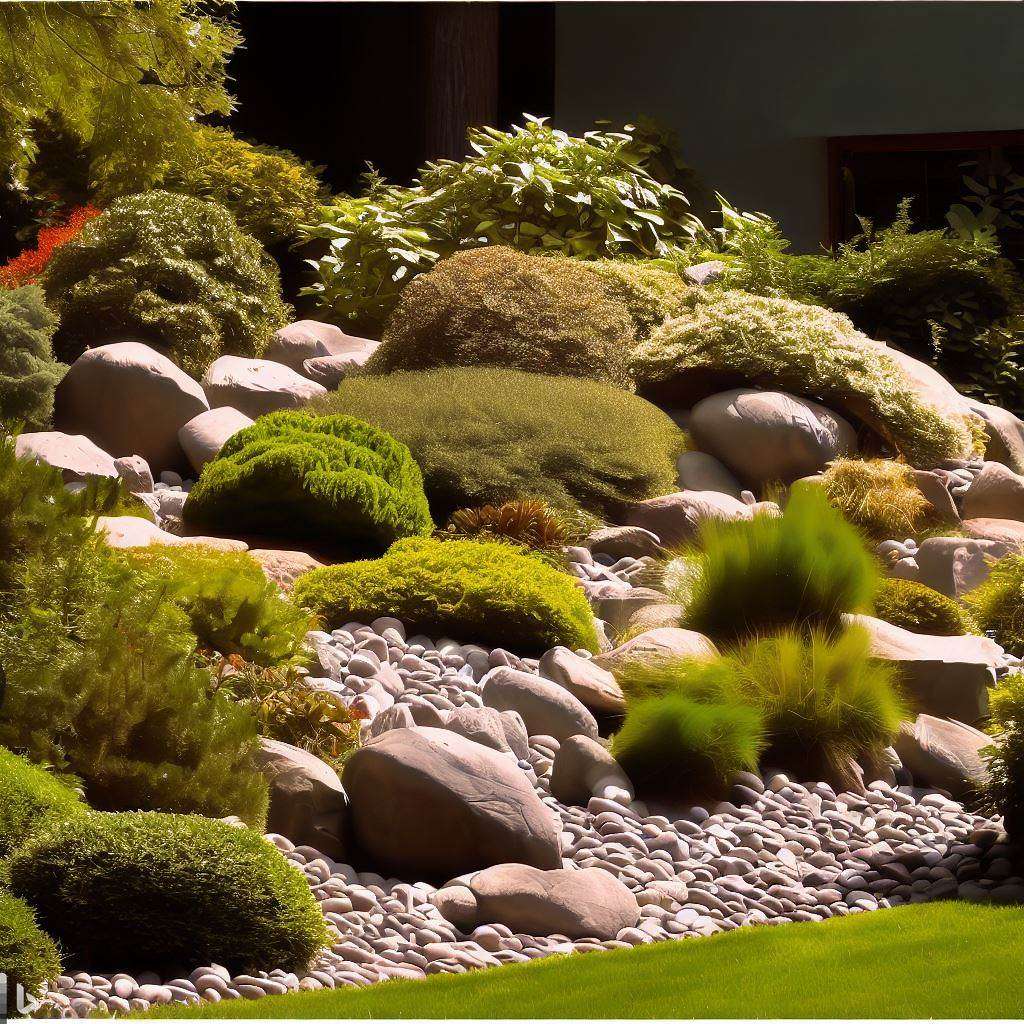
To start, remove any plants or vegetation from the area where you want to create your rock garden. Then, decide on a design before choosing rocks. You can create a border, line a walkway, create a wall, or create a path.
Once you have your rocks, place them in the desired location and make sure they are securely in place by packing soil around the base. The final job is to choose shrubs and plants that thrive in shallow soil to plant between the rocks.
Rocks in landscaping offer numerous benefits, such as creating a sense of peace and tranquility, helping to control water runoff, and providing habitat for local wildlife.
Next step, let’s talk about how rock can be used to create retaining walls that not only add visual appeal but also function as natural barriers.
Retaining Walls
Creating a stunning retaining wall with rock is a natural and visually appealing way to add structure to your outdoor space. Rock is the most natural option for retaining walls and different types of rock, such as limestone, granite, and sandstone, make great foundations.
To start, excavate the area and remove plants or vegetation. Remove some soil to get rocks below ground level and use concrete or another type of stabilizer to attach rocks.
To add a level of sophistication to your retaining wall, consider the following tips:
- Play with different sizes and shapes of rocks to create a unique design.
- Incorporate plants and greenery to soften the look and create a more natural feel.
- Use lighting to highlight certain areas and add depth to the wall.
Creating a retaining wall with rock not only adds beauty to your outdoor space, but it also serves a practical purpose. It can prevent erosion, control water runoff, and provide a stable foundation for your landscaping. By using different types of rock and incorporating additional elements, you can create a truly stunning and functional retaining wall.
In the next step, we’ll discuss how to add interest and color to your outdoor space using rock.
Adding Interest and Color
Adding interest and color to your outdoor space with rocks is a natural and visually appealing way to enhance its beauty and functionality. You can choose to use a single type of rock or a combination of various rocks to create a unique design.
Before choosing your rocks, decide on a design that complements your existing landscaping. For example, you can create a border, line a walkway, create a wall, or create a path.
To find rocks for your outdoor space, you can collect them from a local landscape supply store or search for rocks in your area. Be sure to choose rocks that fit your design and are appropriate for your climate. Supplement your rocks with other materials such as gravel or wood bark mulch if necessary to create a more cohesive look.
Adding interest and color with rocks will make your outdoor space more aesthetically pleasing while also providing functionality. You can use rocks to create barriers against pests and block sound from neighbors or noisy roadways.
In the next section, we’ll discuss how you can use rocks to reduce maintenance requirements or water usage by replacing lawn with rocks.
Replacing Lawn with Rocks
If you’re tired of spending countless hours maintaining your lawn, why not replace it with low-maintenance rocks? Not only will you save time and money on upkeep, but you’ll also add a unique and interesting feature to your landscaping.
There are a variety of rocks to choose from, including river rocks, crushed granite, and pea gravel. One benefit of using rocks in place of lawn is that they require very little maintenance. No more mowing, watering, or fertilizing!
You can also use a variety of low-growing plants or grasses to soften the look of the rocks and add some greenery. Additionally, using rocks can help reduce your water usage and save you money on your water bill. Another advantage of using rocks in landscaping is that they can add visual interest and texture to your outdoor space.
You can create a border, line a walkway, or even create a rock garden. Plus, using rocks as ground cover can help control weeds and prevent erosion. So, if you’re looking for an easy way to add beauty and function to your landscaping, consider replacing your lawn with rocks!
By using rocks in your landscaping, you can create a beautiful and functional outdoor space. Not only do they require minimal maintenance, but they can also help control water runoff, provide habitat for local wildlife, and block sound from noisy roadways. In the next section, we’ll explore some of the benefits of using rocks in more detail.
Benefits of Rocks
Using rocks in your landscaping has tons of benefits that go beyond just adding visual appeal and natural beauty. Rocks can also help control water runoff, provide habitat for local wildlife, create barriers against pests, and block sound from noisy neighbors or roadways. By incorporating rocks into your landscaping, you can create a sense of peace and tranquility that will make your outdoor space feel like an oasis.
One of the biggest benefits of using rocks in your landscaping is their ability to control water runoff. By creating drainage channels or incorporating rocks into your garden design, you can prevent ponding or flooding and help keep your yard looking its best.
Rocks also provide a habitat for local wildlife, which can help attract beneficial insects and birds to your yard. Additionally, rocks can create barriers against pests, such as rabbits and deer, which can help protect your plants and flowers from damage.
Overall, using rocks in your landscaping is a smart choice for homeowners who want to add both beauty and function to their outdoor space. Whether you’re looking to create drainage channels, add interest and color, or replace your lawn with rocks, there are a variety of ways to incorporate rocks into your landscaping design.
By taking advantage of the many benefits of rocks, you can create a yard that is both beautiful and functional, and that will provide you and your family with years of enjoyment.
Summing Up
Now that you know the benefits of using rocks in your landscaping, let’s sum up the different ways you can incorporate them into your outdoor space.
From creating drainage channels to laying down rocks in place of lawn, there are many ways to use rocks for both beauty and function.
One option is to use rocks for edging, which provides a clean and refined look to your walkways and driveways.
Another option is to create a rock garden, using rocks as the primary decorative element. You can choose from various styles, such as alpine, desert, cascade, Japanese, and Chinese, depending on your preference.
Lastly, you can use rocks to add interest and color to bland spaces. Whether you choose a single type or a combination of various rocks, you can create a border, line a walkway, create a wall, or create a path.
By supplementing with other materials such as gravel or wood bark mulch if necessary, you can create a unique and beautiful outdoor space that is both functional and aesthetically pleasing.
So there you have it – seven ways to use rocks in your landscaping for maximum beauty and function.
From drainage channels to retaining walls, from rock gardens to replacing lawns with rocks, there is no shortage of creative ways to incorporate rocks into your outdoor space.
And the benefits are numerous – not only do rocks provide natural barriers against erosion, floods, and hurricanes, but they also add a sense of tranquility and peace to your surroundings.
As the great poet Robert Frost once said, ‘Good fences make good neighbors.’ And in the case of landscaping with rocks, good landscaping makes for a good home.
So go forth and experiment with rocks in your outdoor space – you may just be surprised at how much beauty and function they can add to your surroundings.